• Skip to primary navigation
  • Skip to content
  • Skip to footer

Westside Communities Alliance

A partnership between Atlanta's westside communities and institutions of higher education.

  • Home
  • About
  • Initiatives
    • Data Dashboard
    • Westside Resource Center
    • Technology Enterprise Park
  • Stories
  • Community
  • Volunteer
  • Calendar

WCA Launches Data Dashboard

February 22, 2016 by Mackenzie Madden

The Westside Communities Alliance introduced a comprehensive interactive Data Dashboard for Atlanta on February 11th.

The WCA Data Dashboard serves as a one-stop shop for key data that is accessible to community stakeholders, researchers, local government agencies, and relevant foundations interested in sustainable Westside community development.

“We believe that this tool has the potential to encourage greater data-driven decision-making at the neighborhood and Neighborhood Planning Unit (NPU) level in addition to supporting research and policymaking that addresses significant challenges in areas of education, economic development, transit and mobility, and public safety,” said WCA Associate Director Mackenzie Madden.

In its current form, the dashboard offers resources in seven categories:  1) Community Profiles, 2) Economic Development, 3) Education, 4) Public Safety, 5) All Data, 6) Historical Data, and 7) Resource Library.

Presently, the dashboard displays information for NPU’s K, L, and T – the three NPUs connected to the WCA – as compared to the City of Atlanta.

The dashboard is a user-friendly tool that:  1) draws upon available quantitative and qualitative data, 2) stores data collected for current and future research initiatives, 3) provides metrics for assessing the success of diverse engagement and intervention models, and 4) develops comprehensive reports to identify the impact of “anchor institutions” such as Georgia Tech on neighboring communities to highlight knowledge gaps.

The Data Dashboard project began in 2011 as a static Westside neighborhoods asset map created in conjunction with faculty in the Georgia Tech College of Architecture. Under the leadership of Dean Royster and her WCA leadership team, the first virtual tool was created in Fall 2013 by a group of graduate students in Dr. John Stasko’s Data Visualization class. That iteration mapped transit and walkability in the city. The platform also provided a heat map of census data that has since been transformed into the Big Data tool available today. Graduate Research Assistants in the Ivan Allen College of Liberal Arts continued building the dashboard into its present form.

Katie O’Connell, MCRP 2015, was hired as the Project Manager for the Data Dashboard in Summer 2014. She began by researching similar platforms across the country and collecting relevant data for the city of Atlanta. During an Online Tools session of the WCA’s 2014 Community Studio, O’Connell was able to determine the basic pros and cons of existing resources such as the Atlanta Regional Commission’s Neighborhood Nexus, the U.S. EPA’s Enviromapper, and the U.S. Census Bureau’s American Community Survey. Several focus groups with Westside residents and stakeholders were held as various portals were designed to garner feedback on the usability of the dashboard.

The WCA staff has presented the dashboard at various conferences and symposia including The Center for Community Progress’ Vacant Properties Conference in 2015, Atlanta Studies Symposium, TEDx Atlanta, and the Georgia Tech Center for Urban Innovation.

The WCA Data Dashboard has been made possible through various stages of development in collaboration with entities at Georgia Tech including College of Architecture, College of Computing, Ivan Allen College of Liberal Arts, the Center for Geographic Information Systems, and with funding from the Ford Foundation.

Please visit wcadatadashboard.iac.gatech.edu to explore the platform. Please use the hashtag #WCADataDashboard in social media settings, when referencing the tool.

Filed Under: Arts, Building an Alliance, Culture, Development, Education and Student Engagement, Environment, Events, Food and Health, Health, Initiatives, News, Stories, Transit, Water, Westside Stories

ARC Poverty & Transportation Workshop

February 4, 2015 by Mackenzie Madden

ARC Poverty & Transportation Workshop


WCA Staff attended the Atlanta Regional Commission’s first Building Opportunity Workshop on Poverty and Transportation Access in Metropolitan Atlanta on January 21, 2015. Speakers included Rebecca Burns, Deputy Editor of Atlanta Magazine; Keith Parker, CEO of MARTA; Dr. Michael Rich, Executive Director of Emory Center for Community Partnerships; and Nathaniel Smith, CEO of Partnership for Southern Equity. Attendees had round-table discussions to give input on these issues in the context of: the vision, policies, funding, and obstacles.

View the attachment for highlights of the presentation, and view ARC’s website: http://atlantaregional.com/the-regional-plan/get-informed/building-opportunity-workshop-series for slides, maps, and a full report on the table discussions.

View the video that Atlanta Magazine produced on income inequality on a 2 mile, 5 minute drive from downtown to the Westside traveling Ivan Allen Jr. Blvd to Joseph E. Boone Blvd.: http://www.atlantamagazine.com/article/video-atlantas-income-inequality-in-less-than-2-miles-and-5-minutes/


Poverty and Transportation Highlights 2015

ARC Poverty & Transportation Highlights

Filed Under: Development, Transit

Atlanta BeltLine @ NCA

February 2, 2015 by Mackenzie Madden

Northwest Community Alliance – January Meeting

Paul Morris Updates the NCA


Atlanta BeltLine, Inc. on the Westside

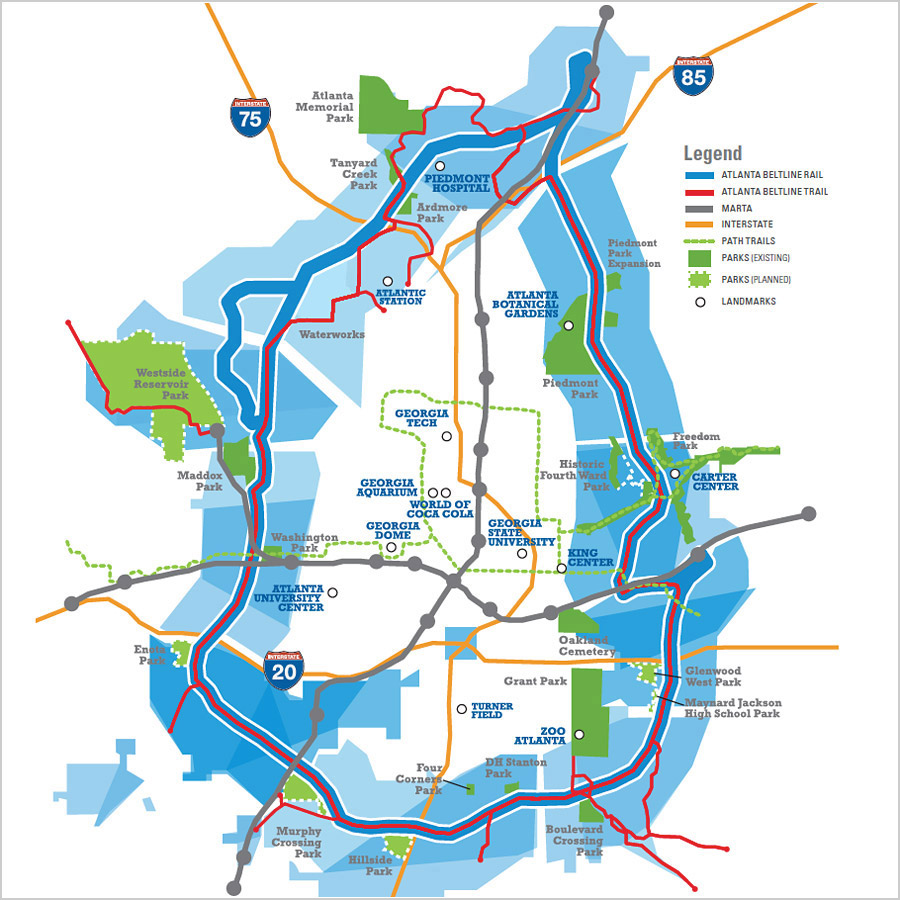
WCA staff attended the first Northwest Community Alliance of the year. Paul Morris, President and CEO of Atlanta BeltLine, Inc. (ABI) was the evening’s guest speaker. Mr. Morris did a wonderful job of updating the residents on recent accomplishments of the BeltLine, new policies adopted by the Board, and some timelines for assessments, grants, and implementations. He was gracious enough to answer questions after he spoke. His presentation as well the question/answer section can be found in the attachment below.

NCA_Jan2015_PaulMorris
  Attachment


For more information on the Atlanta BeltLine visit http://beltline.org/


Atlanta BeltLine Trail

Where Atlanta Comes Together


Filed Under: Development, Transit

2015 Proposed Infrastructure Bond

August 20, 2014 by Mackenzie Madden

2015 Proposed Infrastructure Bond - Atlanta, GA

2015 Proposed Infrastructure Bond for Atlanta, GA

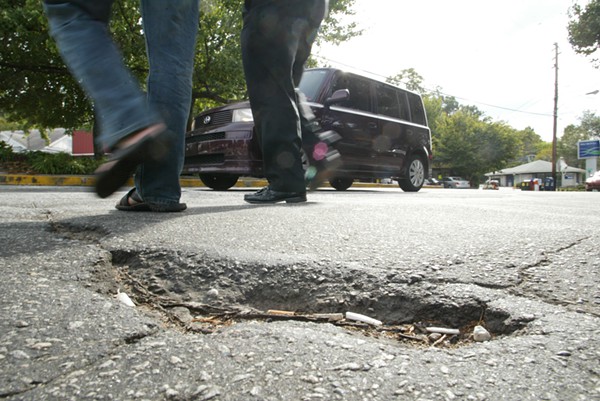
Will Atlantan’s have the change to vote on a proposed infrastructure bond? The Westside Communities Alliance staff attended one of the public information hearings on the 2015 Proposed Infrastructure Bond. The  bond would address Atlanta’s $900 million infrastructure backlog and pay for improvements and maintenance. Additional information on the bond and how it would impact Atlanta’s future can be found through the links below.

Notes from the meeting can be viewed here: InfrastructureBondMeeting_071614

Future public information meetings can be viewed here: http://www.atlantaga.gov/modules/showdocument.aspx?documentid=14334

Information from the city can be viewed here: http://www.atlantaga.gov/index.aspx?page=1145

Filed Under: Development, Transit

Location Affordability Portal

August 7, 2014 by Mackenzie Madden

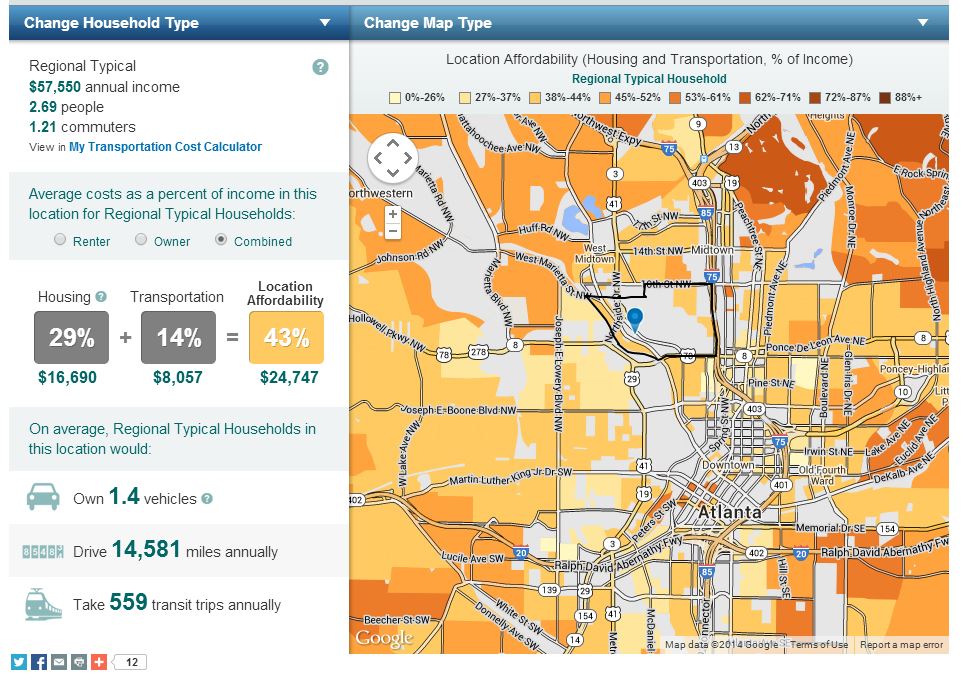
The WCA office according to the Location Affordability Index.

 
[clear]
On July 16th, WCA staff was present at the Version 2 Pre-Launch of the Location Affordability Portal. The portal is a product of Sustainable Communities, the partnership between the Department of Transportation, Environmental Protection Agency, and Department of Housing and Urban Development and the launch was one of only two throughout the nation.

Research shows that the average American family spends 52 cents of every dollar is spent on housing and transportation. The tool is intended to give families an extra metric for decision-making when it comes to choosing where to live and work. It combines the Location Affordability Index and the My Transportation Cost Calculator to provide the public with access to data on housing and transportation costs.

Cicely Garrett, of the Atlanta Community Food Bank, made a good point to the presenter about one fallacy of the tool: not taking into account the value of time. Especially here in Atlanta, where the rail system is less extensive than other cities, a wait for a bus, a transfer, and a ride on the train may take significantly longer than a ride in a car. Josh Geyer of the HUD Office of Economic Resilience, argues that time spent on public transit can be better utilized than time spent driving a car.

To use the portal, simply go to http://www.locationaffordability.info/ where you can explore both tools. In the Location Affordability Index, you can view annual averages (including number of residents per unit, number of vehicles owned, vehicle miles traveled, and transit trips) for your region by inputting your address.

The Transportation Cost Calculator creates a profile for you and your family based on where you live and work and how often you use a car compared to transit. You can even make multiple profiles for different housing or work options to see how one location compares to another in terms of affordability.

See highlight statements from the second panel: LAP_Panel2

See hand-out from the event: LAPhandouts.

Filed Under: Development, News, Transit

  • Page 1
  • Page 2
  • Page 3
  • Page 4
  • Next Page »

Follow US!

  • Email
  • Facebook
  • Flickr
  • Twitter
  • YouTube

Contact Us

  • Address: 781 Marietta Street Atlanta, Georgia 30318
  • Email: westsidecommunitiesalliance@gmail.com
  • Phone: 404-385-7536

Copyright © 2020 · Aspire Pro on Genesis Framework · WordPress · Log in