• Skip to primary navigation
  • Skip to content
  • Skip to footer

Westside Communities Alliance

A partnership between Atlanta's westside communities and institutions of higher education.

  • Home
  • About
  • Initiatives
    • Data Dashboard
    • Westside Resource Center
    • Technology Enterprise Park
  • Stories
  • Community
  • Volunteer
  • Calendar

A Georgia Tech researcher asks: Where are the black students…

September 18, 2013 by Mackenzie Madden

 A Georgia Tech researcher asks: Where are the black students in science, math?

By Maureen Downey (Atlanta Journal-Constitution)

Dr. Kamau Bobb is a research scientist at the Center for Education Integrating Science Mathematics and Computing  at Georgia Tech. This is his first piece for the AJC Get Schooled blog.

By Kamau Bobb

“Stem for All. All for Stem” is the refrain heard throughout the nation and in Georgia.  The national emphasis on improving Science, Technology, Engineering and Mathematics education is to ensure the United States maintains global technological and economic leadership.

Emphasis on STEM has become the cornerstone of the national education dialogue. National and state level focus is on increasing the number of students who graduate from college with STEM degrees to meet growing workforce needs.

Behind the mask of those broad and very real concerns is the withering reality of the under-preparedness of black students in the basics of mathematics and science.  The vast majority of black students in Georgia are completely excluded from real participation in the STEM education conversation.

Not since the launch of Sputnik in the late 1950s has the United States put so much emphasis on mathematics and science education.  In the 50s, black children were locked out of many educational opportunities because of segregation.  Now, more than a half century later, there is resurging attention to STEM fields, but most black children are locked out because of inadequate preparation.

There are innumerable high school and university level programs targeting black and underserved students designed to increase the number of STEM majors and graduates. Many STEM programs are based on the premise that exposing students to exciting applications of STEM studies will hook their intellectual interests and get them to want to pursue STEM education. Despite the efforts of these programs, black and underserved students are essentially locked out of pursuing STEM degrees.

The ugly reality is that the majority of black students in Georgia are not nearly academically equipped in mathematics and science to handle the rigors of post-secondary STEM education.

During the 2011 administration of the Georgia High School End of Course Test for Mathematics I examination, more than half, 54 percent, of the nearly 52,000 black students who took the exam, failed. The failure rate got worse when considering Mathematics II which is the integrated mathematics course that covers statistics, algebra and geometry. Of the approximately 44,000 black students who took that exam, nearly 60 percent failed.

Math II is essentially the gateway to post-secondary STEM education. Black 10th and 11th graders who took this examination are the only sub-group of students in the state where more students failed than passed. These rates are a stunning failure of the educational system in a state where 37 percent of all students in public schools are black and the vast majority of black children attend public schools.

Georgia is arguably two different states, the Atlanta metropolitan area and the rest of the state.  The concentration of resources and academic talent around the Atlanta area is significant.  Nearly half of all adults, approximately 45 percent, in the metro area have post-secondary degrees of some kind, as opposed to 20 percent or less in the rest of the state.  Despite the opportunities and the concentration of educated adults, the academic performance for black students in Atlanta Public Schools is grim and the racial achievement gap is thriving.

Percent of students who failed Mathematics II EOCT, 2011.  Source, Georgia Governor’s Office of Student Achievement
black white
APS 71 21
Fulton 62 10
DeKalb 57 18
Gwinnett 47 20
Cobb 45 14

71 percent of the 2,500 black students in APS who took the Mathematics II exam in 2011, failed and only 1 percent, 25 students, passed with distinction (Pass Plus). By contrast, only 21 percent of white students failed with 79 percent passing and 23 percent of those passing with distinction.

In Fulton County, where 62 percent of black students failed the Mathematics II exam, 90 percent of the white students passed, 32 percent with distinction.  The failure rates and achievement gaps throughout most of the school districts in the metro-Atlanta area are astonishing.

The consequence of this reality is that black students are excluded from much of the STEM conversation and are nearly entirely excluded from the higher level STEM education discourse.  For the incoming 2013 freshman class of first time full time freshmen at Georgia Tech, for example, there were only 61 applicants from the entire Atlanta Public School system, nearly 2,500 seniors. Of those 61 applicants, 26 were admitted and 15 have enrolled.

Despite APS being 79 percent black students, only 28 percent, or 17 applicants, of the total applicants from APS were black.  Of those 17 applicants, only 1 black freshman was admitted.

The vast majority of black students are simply locked out of the most selective ranks of STEM education.  According to the 2010 Schott report in black males and education, “The Urgency of Now,” this problem is compounded by data that suggests that only 42 percent of black male students even graduate from high school in the Atlanta area public school systems.

Despite the array of outreach programs at Georgia Tech, only a single black student in the neighborhood of Georgia Tech was admitted to one of the premiere technical universities in the world.

The tragedy of this painful condition is that it is poised to get worse.  The arrival of the Common Core State Standards for English Language Arts and Mathematics is going to etch an even bleaker landscape. The higher standards and new aligned assessments will reveal that the chasm between current student performance and competitive competency is even larger than we think for all students.

In the first administration of the new Common Core aligned assessment of Georgia students, only 37 percent of all students in the state passed the 2013 Coordinate Algebra examination.  In defense of both teachers and students, first round assessments are always difficult as the system adjusts to new standards.

The obvious challenge, however, is that the educational system was not able to bring black students up to the existing standards of mathematical fluency. How will it now bring those students to even higher academic standards?

Given that the current mechanism is insufficient to bring black students to minimum levels of proficiency, it is a logical expectation that with higher standards the result will simply be more students failing.  The claim that higher standards are reflective of higher expectations is true.  A standard, however, is an end not a mean.

If we are not careful, the STEM education conversation can become a mask.  Without intentional focus on and considerable investment in strengthening our means, the end will be an increase in student failure, disenchantment and exclusion. It will help us cover the ugly and far more difficult challenge we now face of equitably nurturing and developing all of our children.

The mask may well, as poet Paul Laurence Dunbar wrote, grin and lie and hide the anguish of thousands of black children.
Filed Under: Education and Student Engagement, News, Student Engagement

Atlanta’s NPR station now following Project ENGAGE

July 2, 2013 by Mackenzie Madden

Jim Burress, from WABE.org and 90.1 FM, is following the story of 12 Westside high school students as they progress through Project ENGAGE, which stands for Engaging New Generations at Georgia Tech through Engineering.

NPR Stories:

A Year of Opportunity

Tech Grad Students to Help Teens Interested in STEM Field

Read about the Project ENGAGE Mentor Match Luncheon here.

30 students from the single gender high schools B.E.S.T. Academy and Coretta Scott King Young Women’s Leadership Academy applied and 12 were selected to participate. Professor Emeritus Robert Nerem, working with the program, says that they admitted 12 instead of the planned 10 as a result of the high-quality pool of applicants.

In addition to conducting paid laboratory research in the Parker H. Petit Institute for Bioengineering and Bioscience, the program is proving to be a great model for interdisciplinary interaction within Georgia Tech. The mentors had a training session with Taneisha Lee, Program Director of  the Center for Education Integrating Science, Mathematics, and Computing (CEISMC). Lee Baker, president-elect of Georgia Tech Black Alumni Association came and spoke to the scholars about the concept of “belonging”.

The program began with a four week cell biology boot camp led by Dr. Manu Platt. Professional development activities learned through the program include: written and oral communication; data analysis; time management; and accessing online databases. In the coming month, scholars will participate in Responsible Conduct in Research training from Senior Academic Professional Jason Bornstein in Ivan Allen College of the Liberal Arts and industry visits to a cell therapy company and a medical company.

Nerem says that Project ENGAGE is meant to inspire the scholars to aspire to a life of possibilities.

On July 26th, the scholars will be giving short oral presentations about their research thusfar followed by a poster exhibition and luncheon. For more information about Project ENGAGE, please contact Robert Nerem at 404-894-2768.

Filed Under: Education and Student Engagement, Initiatives, News, Student Engagement, Uncategorized

Washington Park Community Service with GT OMED Students

June 25, 2013 by Mackenzie Madden

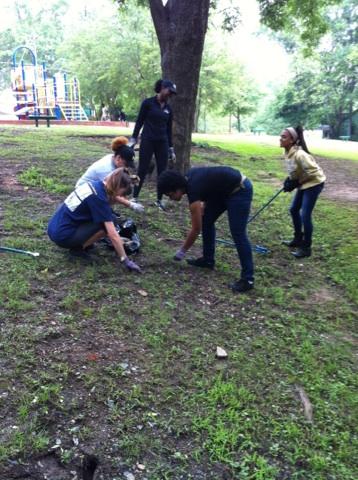
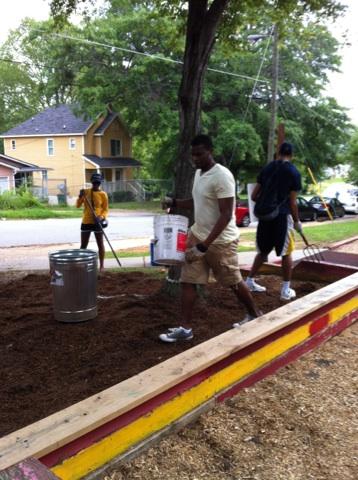
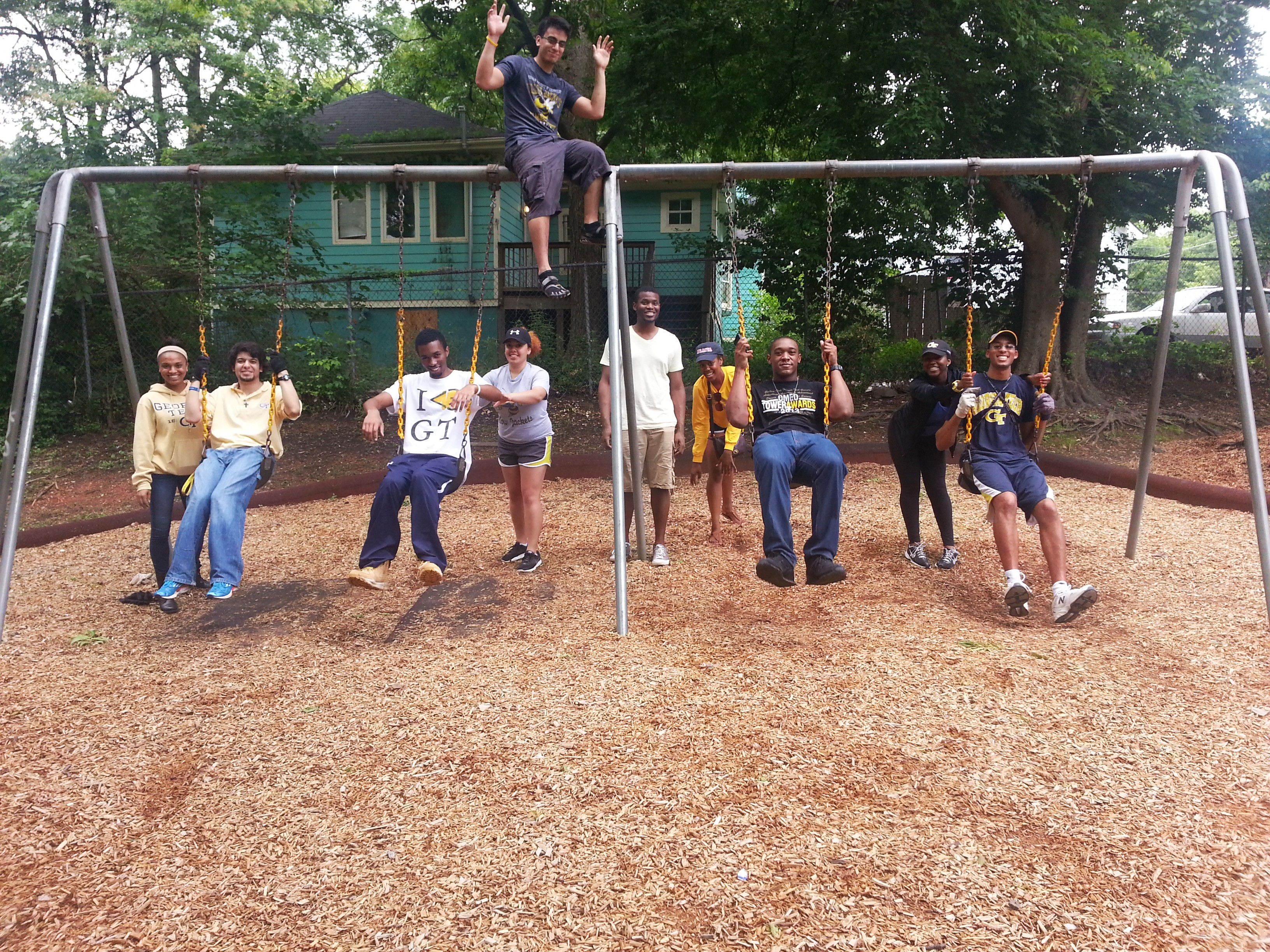
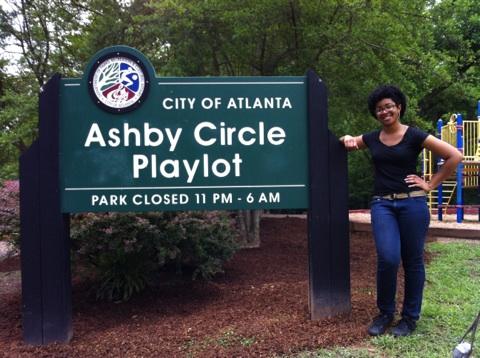
Early on a Saturday morning, 12 bright-eyed and bushy-tailed Georgia Tech students – OMED (Office of Minority Educational Development) Challenge counselors with Andre Dickens, Assistant Director of Outreach Initiatives with OMED – met at Ashby Circle Playlot ready to volunteer with the Washington Park Community Club and Neighborhood Association, led by Christi Jackson. Some volunteers even walked from Tech’s campus to be there.

IMG_2636

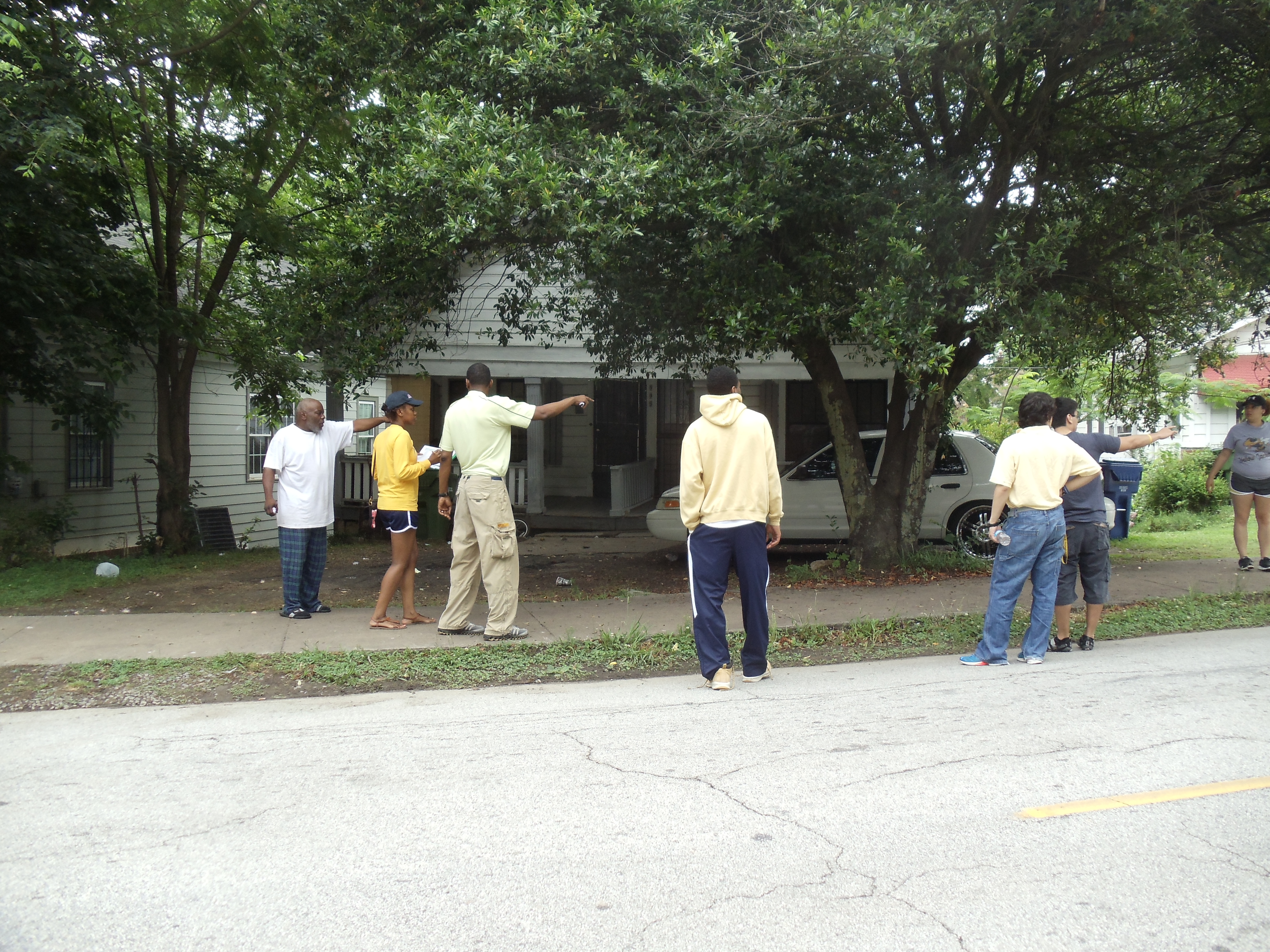
The first order of duty was to canvass the Washington Park neighborhood to complete a survey of: vacant properties, senior citizens, pet-owners, home-owners v. renters, and structures with fire damage.

WashingtonParkCanvassing

After canvassing, the students began cleaning up the park. Located near a ravine, the park is plagued with stormwater surges rushing through the area. Many of the tree roots suffer are exposed from soil run-off and the grassy areas are littered with broken glass and debris making it unsafe for actual play. West Atlanta Watershed Alliance arranged mulch to be delivered and students covered the exposed roots to provide more stabilization. Other students worked to pick up trash, broken glass, and some interesting car parts that were found on the playground.

GlassPickUp_GT_AshbyCircle


GT_Mulch_AshbyCircle


See the entire photo album on our Facebook page

GT_OMED_AshbyCircle

Filed Under: Environment, News, Student Engagement, Water, Westside Stories Tagged With: Ashby Circle Playlot, Georgia Tech, OMED, Volunteerism, Washington Park

Communicating Science to the Public

June 19, 2013 by Mackenzie Madden

Dr. Jennifer Leavey, Integrated Sciences Curriculum Coordinator, College of Sciences, GA Tech


In preparation for the Atlanta Science Festival to be held March 22-29, 2014 in Centennial Olympic Park, students in this course will develop communication skills and scientific expertise in the context of designing, creating, implementing, and assessing informal science education exhibits or demonstrations. The students will bring their demonstrations to Westside K-12 schools to  complement classroom science instruction and assess the effectiveness of each project in meeting learning objectives.


If you are an Honors Program student interested in taking the course (BIOL2803), find registration information here.

Filed Under: Education and Student Engagement, Initiatives, Student Engagement Tagged With: Engaged Learning Course, Georgia Tech, Science, University - Community School Events

Project ENGAGE Mentor Match Ceremony & Luncheon

June 17, 2013 by Mackenzie Madden

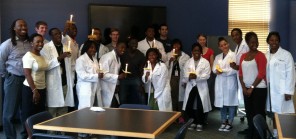
At a luncheon on Monday June 17th, 2013 in Georgia Tech’s U.A. Whitaker Biomedical Engineering building, 12 students from B.E.S.T. Academy and Coretta Scott King Young Women’s Leadership Academy (CSKYWLA) were matched up with their mentors and respective laboratories. After spending the first two weeks of the program in the classroom learning proper laboratory protocol and an intensive science curriculum, the students participated in a speed dating process geared at matching students to mentors. Today, they were given their white laboratory coats during a candle-lighting and reveal ceremony.

MentorMatchCeremonyALL

Project ENGAGE (Engaging New Generations at Georgia Tech through Engineering) is a new internship program that pays local high school students to actively participate in current scientific research under the guidance of Master’s and PhD students and faculty members. The students were chosen after a selection process that included creating a resume, providing reference letters, and complete an in-person interview. The internship will continue throughout the 2013-2014 school year and involves two faculty members, one from each academy. The goal of the program is two-fold: to raise high-school student awareness of the biotechnology world through hands-on research projects and to improve the schools’ current science education program through the teacher training initiative.


See more about the CSKYWLA ENGAGE scholars here.

Filed Under: Education and Student Engagement, Initiatives, Student Engagement Tagged With: Georgia Tech, Science, University - Community School Events

  • « Previous Page
  • Page 1
  • Page 2
  • Page 3
  • Page 4
  • Page 5
  • Page 6
  • Next Page »

Follow US!

  • Email
  • Facebook
  • Flickr
  • Twitter
  • YouTube

Contact Us

  • Address: 781 Marietta Street Atlanta, Georgia 30318
  • Email: westsidecommunitiesalliance@gmail.com
  • Phone: 404-385-7536

Copyright © 2020 · Aspire Pro on Genesis Framework · WordPress · Log in