As part of the Atlanta Promise Neighborhoods Initiative, Morehouse School of Medicine (MSM) was gifted the technology by One Ring Network to provide broadband internet access to every student household affiliated with four Westside public schools. A small working group of relevant Georgia Tech faculty and staff are participating in a collaborative planning process with MSM, the AUC Consortium, and Atlanta Public Schools to develop a sustainable plan to provide internet access and accessible technologies to assist parents with supporting their children’s education.
Parent STEM Portal
Betsy DiSalvo, Assistant Professor of Human-Centered Computing, College of Computing, GA Tech
Working with the Parents as Partners Academic Center, Dr. DiSalvo is interviewing parents from marginalized communities to learn how they think about technology and their common uses of technology to begin developing community-based designs for Parent STEM Portals. As part of the Atlanta Promise Neighborhoods Initiative, Morehouse School of Medicine (MSM) was gifted the technology by One Ring Network to provide broadband internet access to every student household affiliated with four Westside public schools. A small working group of relevant Georgia Tech faculty and staff are participating in a collaborative planning process with MSM, the AUC Consortium, and Atlanta Public Schools to develop a sustainable plan to provide internet access and accessible technologies to assist parents with supporting their children’s education.
Community Historian Project
Christopher LeDantec, Assistant Professor in the School of Literature, Media, and Communication, Ivan Allen College of the Liberal Arts, GA Tech
This project focuses on the ways digital media can empower people to share their voice gave participants in the English Avenue and Vine City neighborhoods iPhones with prompt cards for them to document (by GPS location, audio recordings, and pictures) places in their neighborhood. Examples of prompt cards are: “This will be missed.”,“This is a place to gather.”; “This should change.”; etc. This experience sheds light on parts of the neighborhood that tend to go unseen and creates a form of surveillance that is by the community and for the community.The first-round results were mapped and displayed at English Avenue’s Festival of Lights on October 13th, 2012 and generated new interest for the continuation of the project.
Special Topics: Poverty and Social Justice SSOC230
Sheri Davis-Faulkner, Adjunct Professor in Sociology/Anthropology, Spelman College
This interdisciplinary course encourages students to studying poverty through the narrative lens of social justice. Critical race feminism, the guiding theoretical frame, allows students to examine U.S. poverty by centering subjects (individuals and groups of people) within economic, political, and social systems. The course explores hyper-visible contemporary narratives and images of poverty, juxtaposing them with less visible social justice activities. The class will collectively work to contextualize our popular knowledge and perceptions of poverty and “the poor” historically and politically. Students will reflect on social theories and actions to construct their own definitions and theories of poverty. Finally, teams of students will support four local organizations that serve challenged communities in the areas of health care, environmental justice, education, and economic development; focused exclusively on communities that surround Spelman’s campus. This course supports the Shepherd’s Poverty Alliance internship and Spelman’s Project Impact initiative to serve communities within a 1.7 mile radius of campus.
Bridges Symposium
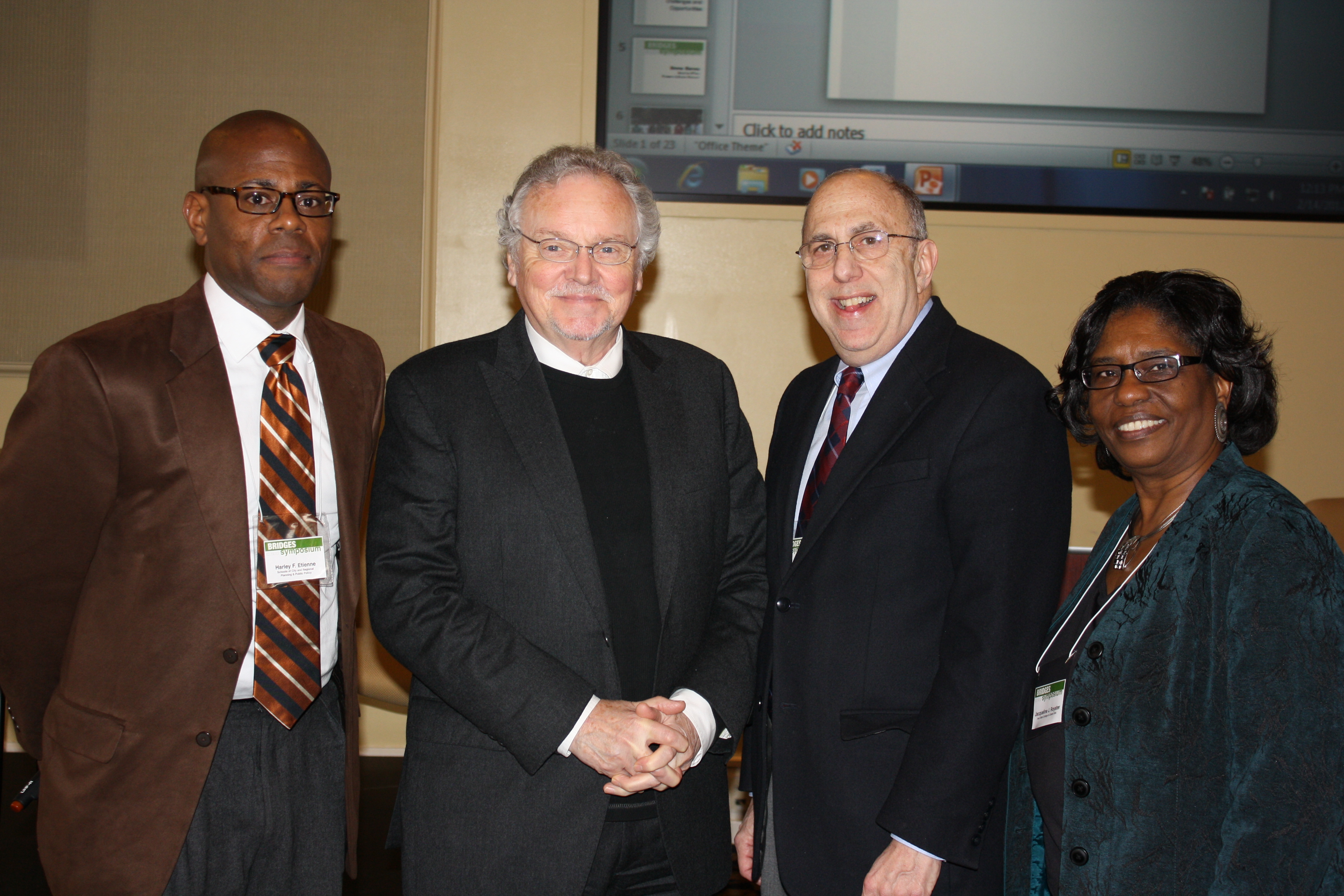 The Bridges Symposium that took place on February 14, 2012, represented a major point of departure for beginning the conversation at Georgia Tech about community engagement. Co-sponsored by the Ivan Allen College of Liberal Arts and the College of Architecture, the symposium featured a keynote speech by Ira Harkavy, Director of the Netter Center for Community Partnerships at the University of Pennsylvania, a leading national voice on university-community partnerships. The event brought together Georgia Tech faculty, staff, and students, and members of the English Avenue Community, to discuss their relationship’s strengths, sites of opportunity, and visions for the future. The Symposium represented a key moment expressing the vision and direction of the Westside Communities Alliance to selected members of the community, as well as catalyzing potential participants at the Institute.